
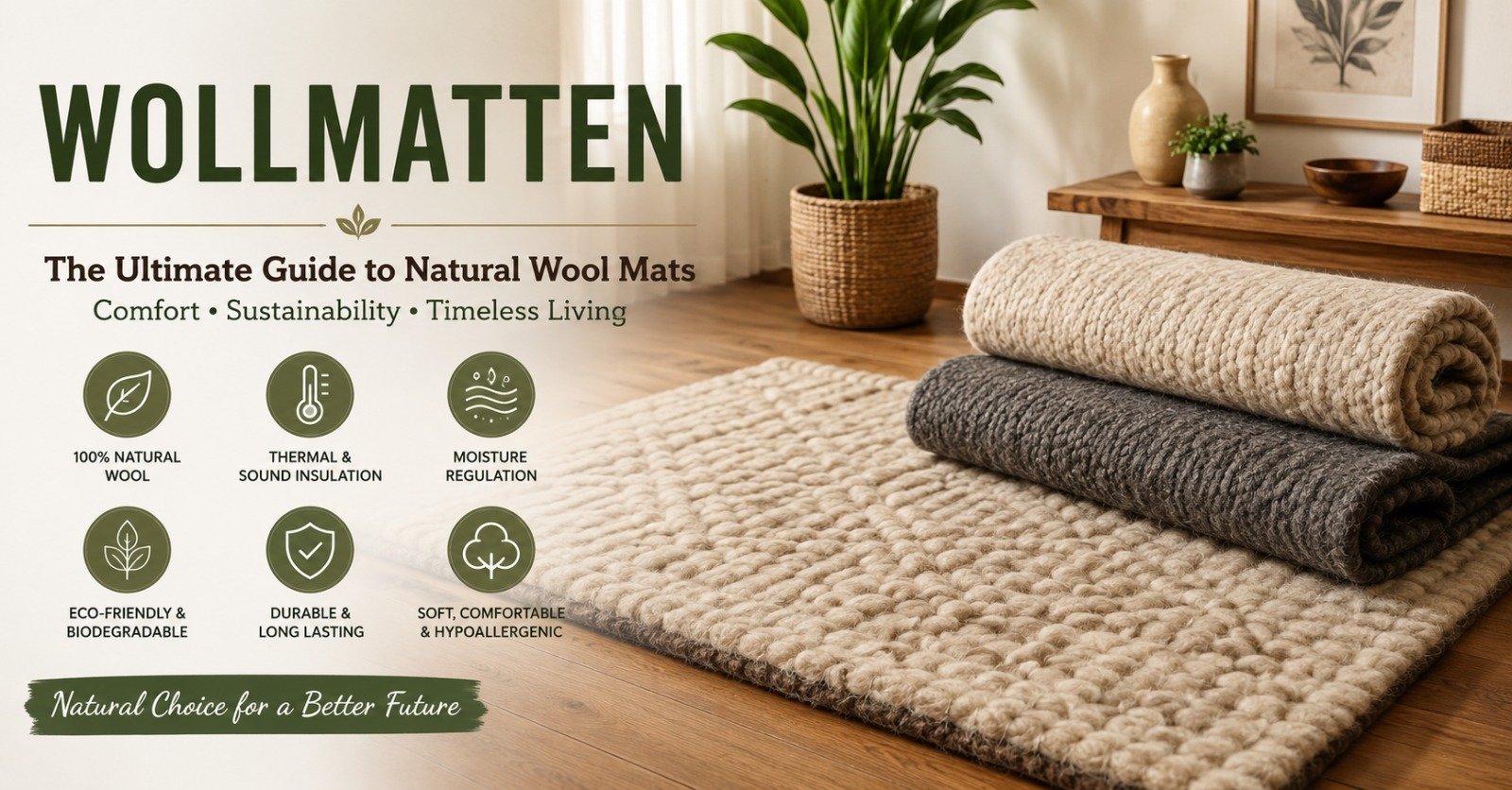
Wollmatten, a German term meaning “wool mats,” refers to natural floor coverings made from sheep wool fibers that are processed into durable, soft, and functional textile surfaces. In recent years, it has gained global attention as people increasingly shift toward eco-friendly, long-lasting, and health-conscious home products.
Unlike synthetic mats made from plastic-based materials, they are created from natural wool, a renewable fiber that has been used for centuries in clothing, carpets, insulation, and home décor. What makes it special is its ability to combine comfort, sustainability, and practical performance in a single product. Today, they are used in modern homes, wellness studios, offices, and interior design projects because they provide warmth, softness, noise reduction, and natural insulation.
What Are Wollmatten?
They are mats made primarily from natural wool fibers obtained from sheep. These fibers are processed through techniques like weaving, felting, or pressing to create a dense and durable mat structure.
The word is derived from:
- “Woll” = wool
- “Matten” = mats
So, Wollmatten simply means wool mats.
However, their function goes far beyond simple floor coverings. They are multi-purpose textile products that can be used for flooring, insulation, decoration, soundproofing, yoga practice, and even wellness applications.
The natural structure of wool gives unique characteristics that synthetic mats cannot match. Wool fibers contain natural air pockets, making them soft, insulating, and breathable at the same time.
The History and Origin of Wollmatten
The use of wool mats dates back thousands of years. Early civilizations discovered that wool was one of the most useful natural materials for survival because it provided warmth, protection, and comfort.
Ancient Use of Wool Mats
Nomadic tribes in Central Asia were among the first to use wool mats. They created felted wool coverings for tents and portable shelters. These mats protected them from extreme cold, wind, and rough terrain.
European Traditions
In Europe, especially in colder regions like Germany, Austria, and Scandinavia, wool mats became essential household items. Stone and wooden floors were extremely cold during winter, so wool mats were used for insulation and comfort.
Over time, wool mats evolved from purely functional items into decorative household products. Skilled artisans began adding patterns, textures, and artistic designs, transforming wollmatten into cultural and aesthetic items.
Modern Evolution
Today’s they combine traditional craftsmanship with modern manufacturing techniques. While the core material remains natural wool, production methods have improved to enhance durability, design variety, and eco-friendliness.
How Wollmatten Are Made
- They are made from natural sheep wool, making them durable and eco-friendly.
- Wool is collected through shearing, a natural and harmless process for sheep.
- Raw wool is cleaned to remove dirt, oils, and impurities for better quality.
- Fibers are aligned through a process called carding to improve strength and uniformity.
- Final mats are trimmed, shaped, and sometimes dyed using eco-friendly colors.
- The end product is a strong, soft, breathable, and long-lasting wool mat.
Key Features of Wollmatten
They stand out due to their natural properties and performance advantages.
Natural Insulation
Wool traps air within its fibers, creating excellent thermal insulation. This helps keep rooms warm in winter and cool in summer.
Breathability
Unlike synthetic mats, wollmatten allow air circulation. This prevents heat buildup and improves indoor comfort.
Moisture Control
Wool can absorb moisture without feeling wet. This helps maintain balanced humidity indoors.
Durability
Wool fibers are naturally elastic, meaning they return to shape after pressure. This makes long-lasting even in high-traffic areas.
Soft Texture
They feel soft and comfortable underfoot, making them ideal for home use.
Benefits of Wollmatten in Daily Life
They offer both practical and lifestyle benefits.
Comfort and Warmth
Walking on wool mats feels naturally warm and soft. This improves comfort in living rooms, bedrooms, and relaxation areas.
Improved Air Quality
Wool fibers trap dust and airborne particles, helping improve indoor air quality.
Health-Friendly Material
Wool is naturally hypoallergenic and resistant to dust mites, making wollmatten suitable for sensitive individuals.
Noise Reduction
They absorb sound, reducing echo and noise in rooms. This is useful in apartments, offices, and busy households.
Eco-Friendly Choice
Since wool is renewable and biodegradable, they are an environmentally responsible product.
Types of Wollmatten
There are several types of them based on manufacturing methods and usage.
1. Felted
Dense mats made by compressing wool fibers. These are strong and ideal for heavy use.
2. Woven
Made using traditional weaving techniques. These are often decorative and stylish.
3. Shaggy
Soft, fluffy mats with long fibers that provide luxury comfort.
4. Needle-Punched Wollmatten
Industrial-grade mats used for insulation and acoustic applications.
Each type serves a different purpose depending on comfort, design, and durability needs.
Common Uses of Wollmatten
They are highly versatile and used in many environments.
Home Use
They are commonly placed in living rooms, bedrooms, hallways, and entryways for warmth and decoration.
Yoga and Wellness
Their natural softness makes them ideal for yoga, meditation, and relaxation practices.
Office Spaces
Wollmatten improve comfort and reduce noise in work environments.
Interior Design
They are widely used in modern and luxury interiors for aesthetic appeal.
Children’s Areas
Soft wool surfaces provide safe and comfortable play areas for kids.
Wollmatten vs Synthetic Mats
They are often compared with synthetic mats made from plastic-based materials.
Advantages
- Natural and chemical-free
- Longer lifespan
- Better insulation
- Improved air quality
- Environmentally friendly
Disadvantages of Synthetic Mats
- Made from non-renewable materials
- Shorter lifespan
- Can release chemicals
- Poor breathability
Overall, they are considered the healthier and more sustainable choice.
How to Choose the Best Wollmatten
| Factor | Explanation |
| Material Quality | Pure wool is stronger, more durable, and more comfortable than blended or synthetic materials. |
| Thickness | Thicker wollmatten provide better insulation, softness, and comfort underfoot. |
| Size | The size should match the room dimensions and intended usage area. |
| Design | Neutral colors fit modern interiors, while patterns add decorative and aesthetic value. |
| Purpose | Different types are used for décor, comfort, yoga, or industrial applications. |
How to Care for Wollmatten
Proper care extends the life of wool mats.
- Vacuum regularly to remove dust
- Clean spills immediately using blotting
- Avoid harsh chemicals
- Air dry naturally
- Rotate occasionally for even wear
With proper care, wollmatten can last for decades.
Environmental Impact and Sustainability
They are one of the most eco-friendly flooring options available.
Wool is:
- Renewable
- Biodegradable
- Low-impact in production
Unlike synthetic materials, wool decomposes naturally and does not contribute to plastic pollution. This makes they an ideal choice for sustainable living.
Why Wollmatten Are Becoming Popular Again
The global shift toward natural and eco-friendly lifestyles has increased demand for wollmatten.
People now prefer:
- Sustainable products
- Natural home materials
- Long-lasting investments
- Health-conscious living environments
They fit perfectly into all these trends, making them increasingly popular in 2026 and beyond.
Future of Wollmatten
The future of they is strongly linked to sustainability and modern design innovation. With growing awareness about environmental issues, wool-based products are expected to become even more important in interior design, architecture, and wellness industries.
New technologies are also improving wool processing, making it more affordable, durable, and widely available.
Conclusion
They are more than just floor mats they are a combination of tradition, sustainability, comfort, and modern design. Made from natural wool fibers, they offer superior insulation, durability, and eco-friendly benefits compared to synthetic alternatives.
Their versatility allows them to be used in homes, offices, wellness spaces, and interior design projects. As people move toward healthier and more sustainable lifestyles, wollmatten are becoming an essential part of modern living.








Leave a Reply